


Parasites in the body are such a common problem that the patient himself may not even be aware of its presence.What methods are used to diagnose helminths and how to get rid of "uninvited guests" will be discussed in today's article.
Diagnosis of the disease: parasitic analysis

The presence of parasites, their larvae and eggs in the human body is determined by examining the patient's urine or feces, the contents of the duodenum, bile, rectal and perianal mucus, sputum, blood and muscle cells.It is worth noting that there are situations when patients are diagnosed with the presence of several types of parasites, and sometimes there are several stages of development of helminths - from larvae to adult individuals that lay eggs in the intestines.
Trichinella and Strongyloid larvae can be detected in the blood if you analyze the parasites with a coagulant, pass the blood through a centrifuge and examine the composition of the supernatant of the plasma with a microscope.
It is possible to determine the presence of antibodies to nematodes with a blood test no later than two months after infection, while these parasites still exist in the body in the form of larvae.For this reason, parasite analysis is necessary during this period.After completing the so-called larval stage, antibodies are eliminated from the circulation.The most accurate test results can be obtained using serological diagnostic methods.However, it has a significant drawback - it is a rather expensive examination, moreover, it can only be carried out in a special laboratory.On-site diagnosis is performed by ultrasound of internal organs, computed tomography and endoscopy with biopsy.
Parasites in the body: treatment methods
Experts recommend taking preventive measures against helminthiasis in preschool children in spring and autumn.As a rule, this is quite enough.However, if necessary (dangerous epidemiological situation or the presence of obvious manifestations of helminthiasis in a child), it is reasonable to carry out additional deworming measures.
The basis of treatment for the acute phase of the disease is usually desensitization and detoxification.The use of glucocorticoids during treatment is only meaningful in the case of some severe forms of helminths.The fact is that due to improper use of these drugs, a complication such as generalized invasion or transformation of the acute phase into a sluggish subacute phase may occur.
For a long time, to destroy parasites in the body, as well as prevent infections, advocates of alternative medicine have used special plants with anti-parasitic properties.Today, these plants are used in the pharmaceutical industry as raw materials for the preparation of herbal preparations and supplements.However, don't rush to the pharmacy to buy "medicinal weed" if you suspect parasites in your body.All medicines, including herbal medicines, must be individually prescribed by a doctor.They are prescribed with extreme caution to patients who are allergic to herbs.Additionally, you need to be extremely careful when determining the dosage.
Some housewives use some herbs that have anti-parasitic effects in the body as spices in the cooking process.By the way, people in southern countries are especially inclined to consume large quantities of spices, where the likelihood of contracting parasitic diseases is especially high.
The main method of controlling helminths is specific therapy, which uses special deworming drugs.
During the deworming process, patients may experience unpleasant symptoms that some people mistakenly believe are side effects of the medicine.However, the cause of these manifestations is often due to changes in the body related to the destruction of parasites.As a rule, these are short-lived phenomena, their unpleasant effects are neutralized by absorbents.However, parasites in the body are a serious disease, treatment should be carried out under the supervision of a doctor.
Preventing parasites
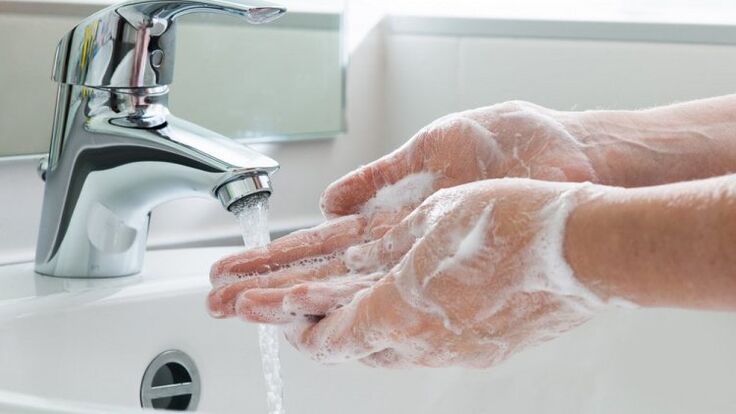
As we said, deworming sessions are recommended to be carried out twice a year - in the spring, preferably in March or April (after the snow melts), and in the fall, after the first frost (in October or November).In addition, effective preventive measures are compliance with basic hygiene rules, that is, washing hands with soap after going out, going to the toilet and crowded places, treating children's toys with soapy water and thoroughly washing plant products in various bodies of water before consumption.In addition, you should avoid eating meat and fish products that have not been heat-treated.If worrying symptoms appear, you should see your doctor to test for parasites and prescribe the correct treatment if needed.